When to Experience the Galapagos
at Its Wildest
The certainty of wildlife encounters and why Albatross lovers should skip February for their Galapagos journey
Straddling the equator, the Galapagos Islands have no seasonal wildlife; it is ever-present. Unlike many of the world’s great nature destinations, where encounters depend on narrow migratory windows, the Galapagos offers something rarer: certainty. Travelers are guaranteed to encounter the archipelago’s extraordinary wildlife at any time of year.
This abundance is so reliable that Metropolitan Touring based its expedition cruising itineraries on maximizing encounters with The Galapagos Big 15 — iconic and endemic species that define the island’s extraordinary biodiversity. Together, they serve as an accessible framework for travelers to understand the richness of the islands’ wildlife and evolutionary significance, while underscoring why responsible, conservation-led travel to the Galápagos is so critical.
The singular exception is the Waved Albatross, which leaves the islands for the month of February. The explanation is complex, but in essence, the extraordinarily large birds need wind to lift off and land, and February is the absolute calmest time in the archipelago. When it returns to Española Island in March, its elaborate courtship rituals and expansive wingspan create one of the Galapagos’ most arresting—and at times comical—spectacles. For those hoping to witness this member of The Galapagos Big 15 in full display, choosing the right itinerary and skipping February for Albatross sightings is essential.
What distinguishes the Galapagos is not simply what can be seen, but how intimately each encounter unfolds. Animals move without fear, shaped by isolation and decades of protection. Courtship dances, nesting rituals, and feeding behaviors play out at close range across lava fields, mangrove shores, and nutrient-rich waters. Each season reveals a different expression of life, without ever diminishing its abundance.
From marine iguanas—the world’s only ocean-going lizards—to blue-footed boobies and giant tortoises, the Big 15 captures the essence of the Galapagos experience: wildlife observed not through spectacle, but through proximity.
Signature Wildlife Encounters
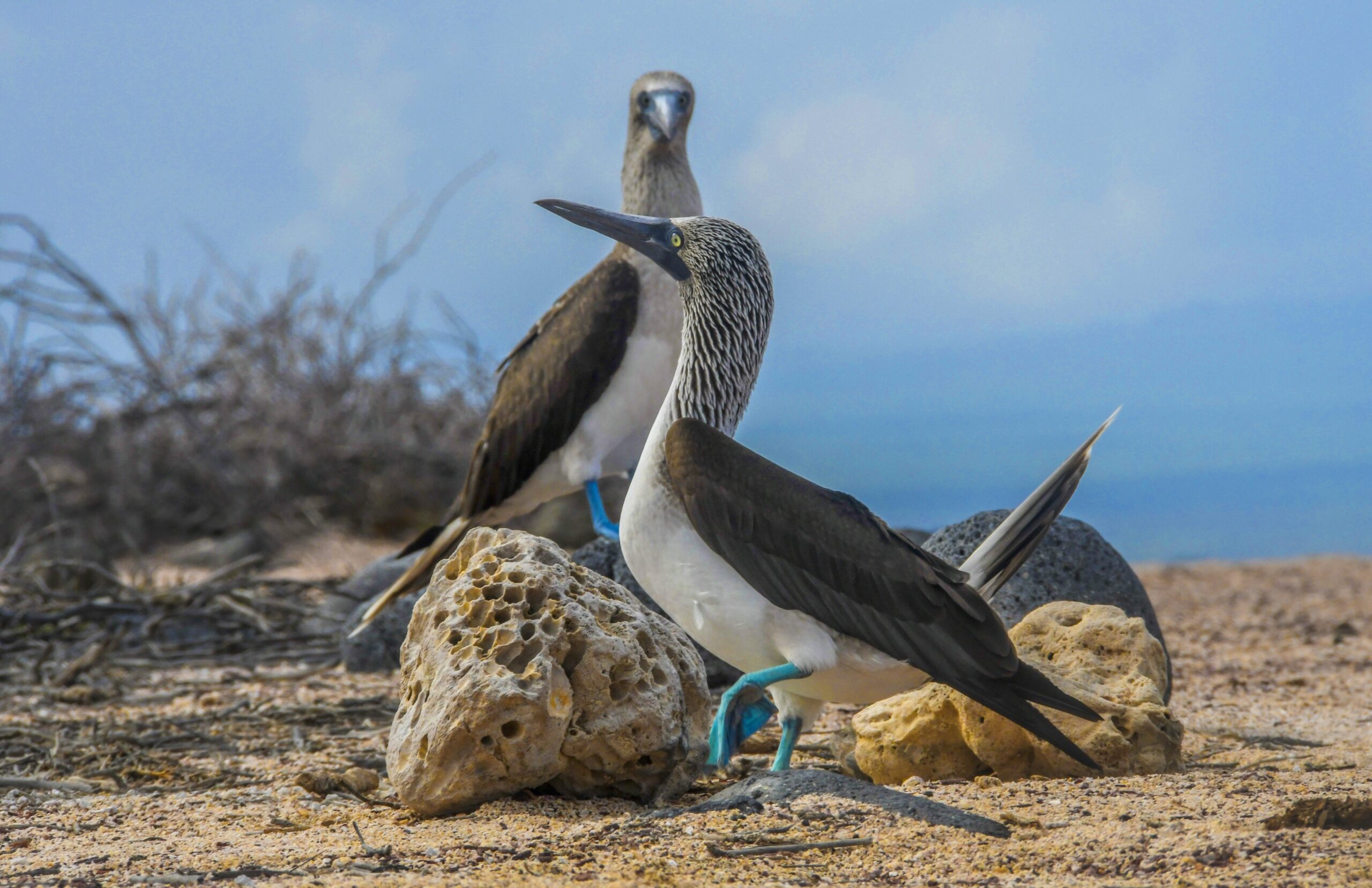
The vast majority of the Big 15 are visible year-round. Blue-footed boobies perform their unmistakable courtship dances, their bright feet flashing against volcanic rock. Nazca boobies nest along steep cliffs, while red-footed boobies gather in coastal forests.
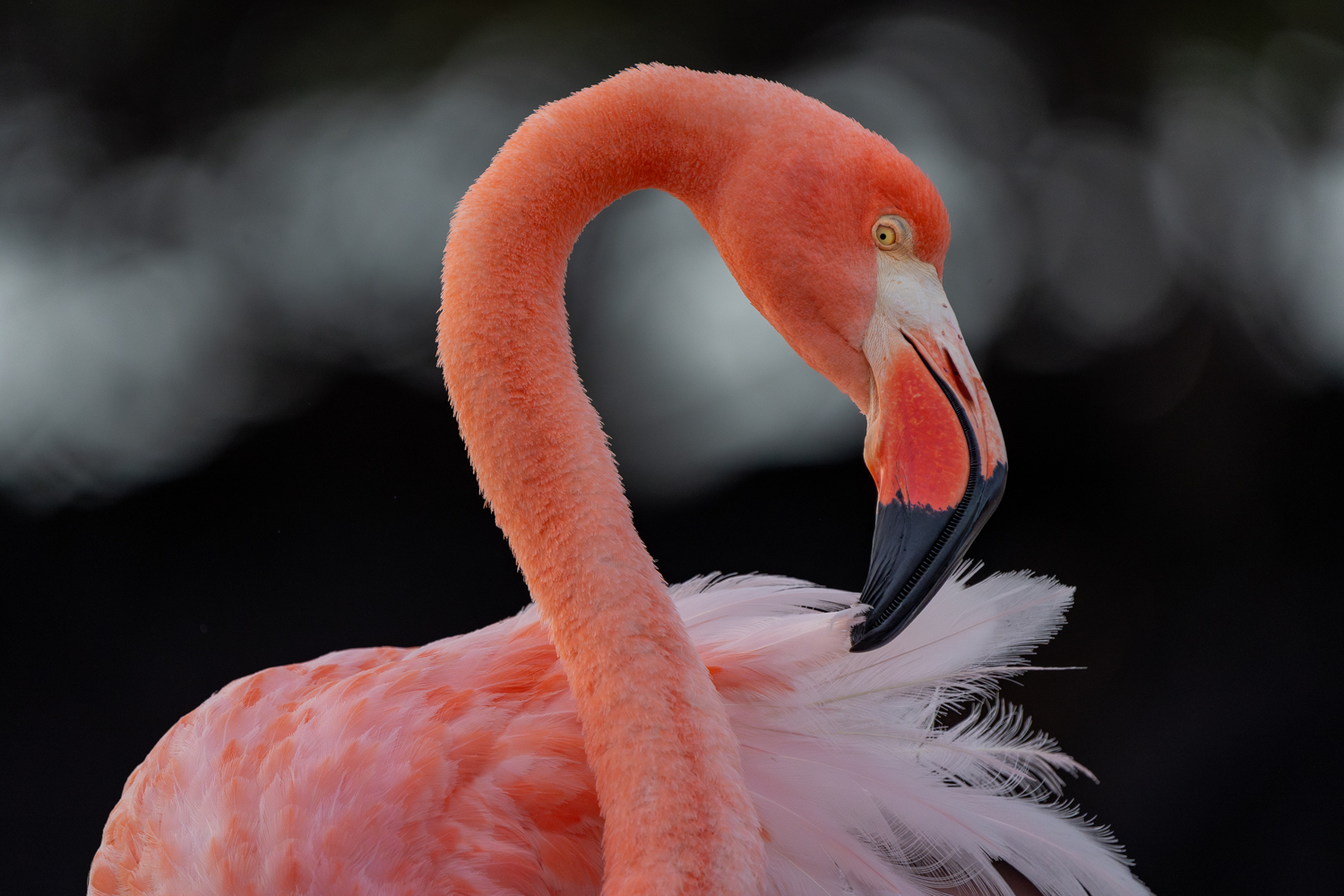
In the western islands, flightless cormorants glide underwater with arrow-like precision, a striking reminder of evolution’s singular paths. Galapagos flamingos bring unexpected elegance to brackish lagoons, their reflections rippling across still water.
Frigatebirds introduce a note of drama: males inflate scarlet throat pouches in bold courtship displays, most often seen in late spring and early summer. Overhead, the Galapagos hawk circles—a rare apex predator in an ecosystem otherwise defined by trust.
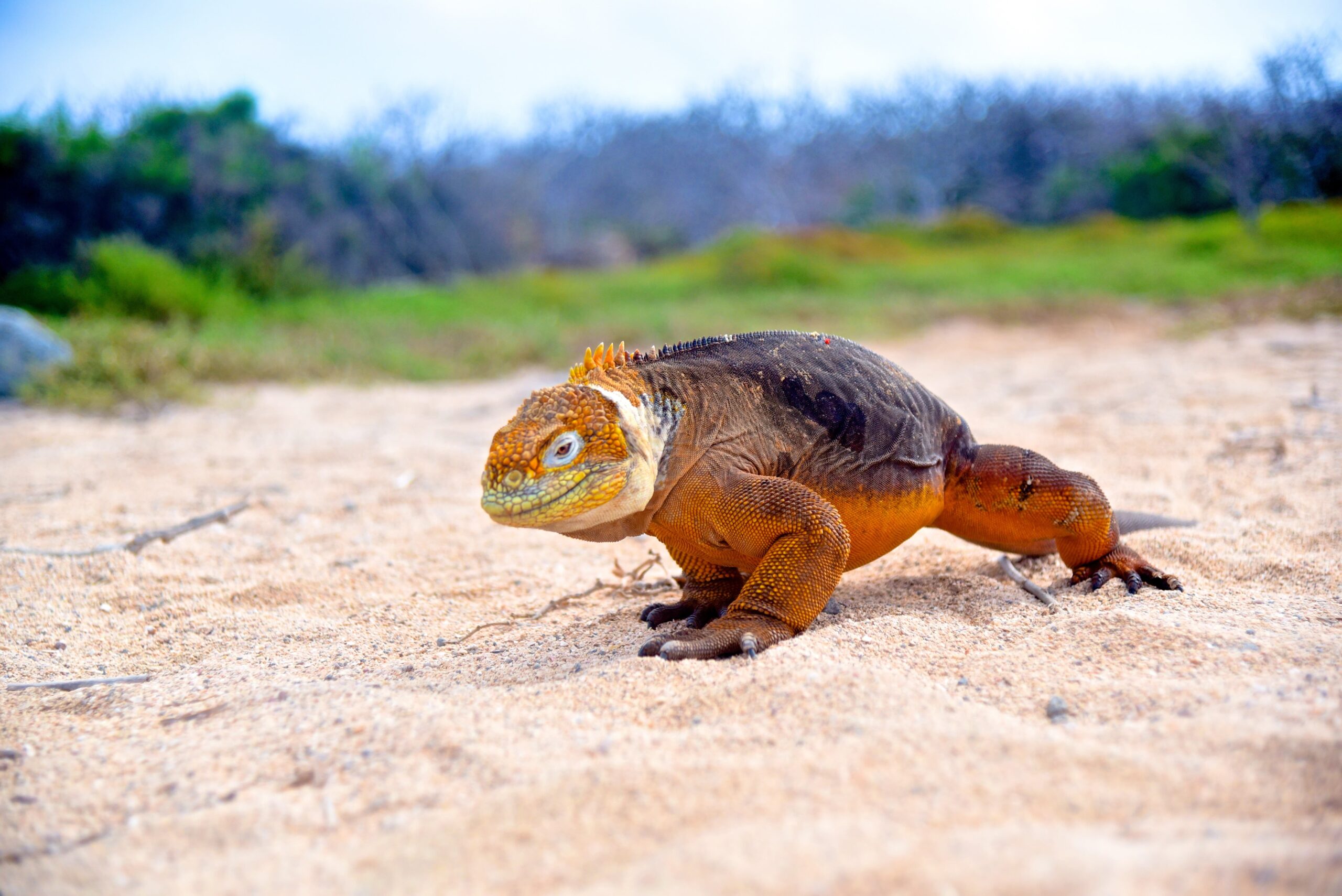
On land, golden-hued land iguanas and the paler Santa Fe iguanas navigate arid terrain, while marine iguanas bask on lava rocks after feeding at sea. Galapagos penguins appear more frequently along the shores of Isabela, Fernandina, Bartolomé, and Floreana.
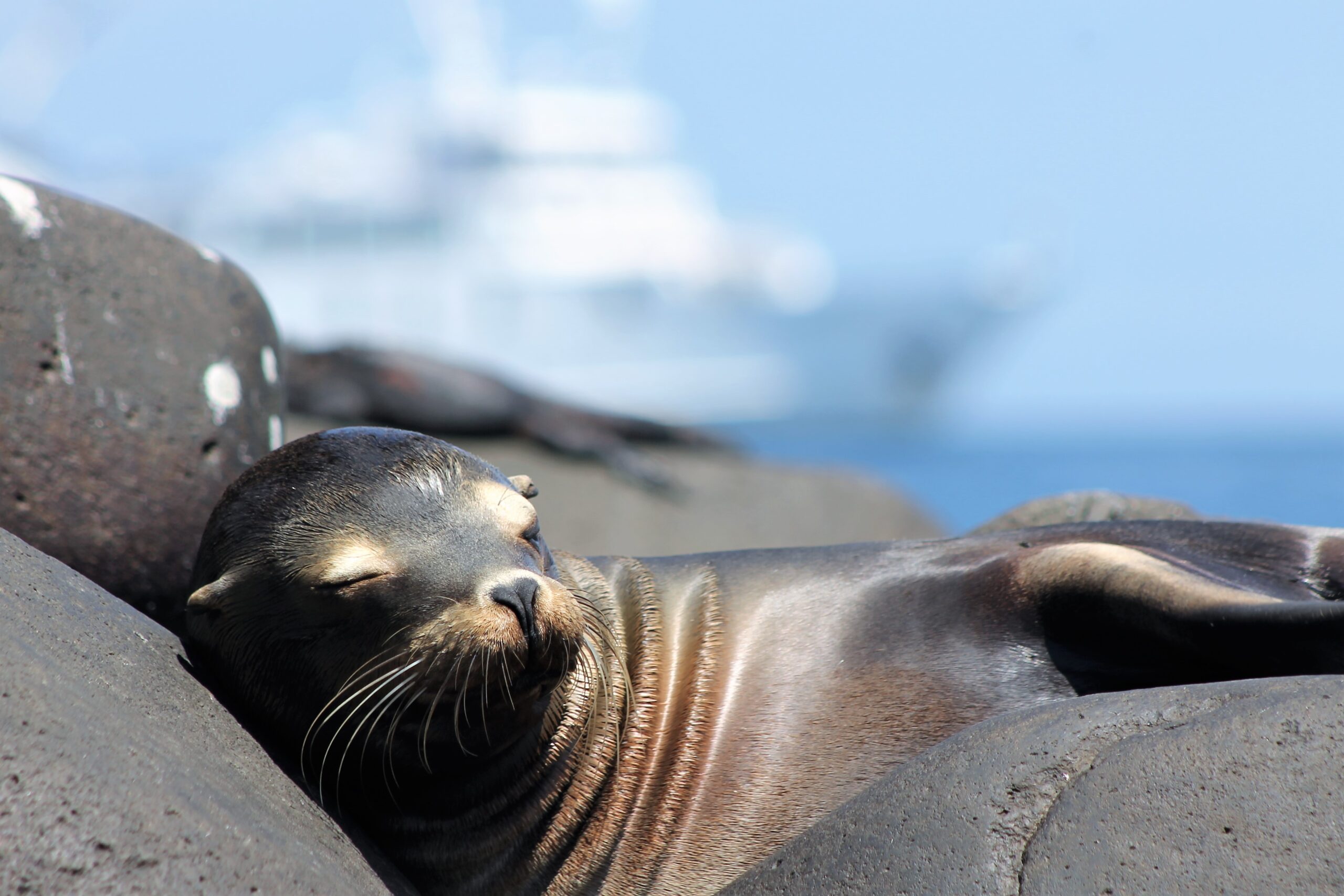
Sea lions remain a constant presence, slipping effortlessly between land and water, while the more elusive fur seals linger in shaded crevices. And then there are the giants: Galapagos tortoises, moving with unhurried authority through highland mists and lowland plains—embodying the sense of time that defines the islands themselves and anchoring The Big 15 as living symbols of endurance.
For a month-to-month guide to experiencing the Galapagos Islands—and encounters with all members of the Galapagos Big 15—visit Best Time to Visit the Galapagos.
The Galapagos Big 15: Iconic Wildlife of the Galapagos
The Galapagos Big 15 identifies the archipelago’s most emblematic species—animals that define the archipelago’s experience through their rarity, behavior, and evolutionary significance.
- Galapagos Giant Tortoise – The enduring symbol of the islands, found roaming highlands and lowland plains.
- Marine Iguana – The world’s only sea-going lizard, grazing underwater before basking on lava rocks.
- Galapagos Land Iguana – Golden-hued and terrestrial, thriving in arid landscapes dotted with cactus.
- Blue-footed Booby – Famous for its vivid feet and ritualized courtship dances.
- Nazca Booby – A striking cliff-nester, often seen along exposed coastlines.
- Red-footed Booby – The most arboreal of the boobies, nesting in coastal forests.
- Waved Albatross – Known for its dramatic wingspan and elaborate courtship displays on Española Island.
- Flightless Cormorant – A masterful underwater hunter, evolved for swimming rather than flight.
- Frigatebird (Great and Magnificent)– Recognized by the male’s inflated scarlet throat pouch during breeding season.
- Galapagos Hawk – The islands’ apex predator, found nowhere else on Earth.
- Santa Fe Iguana – Paler in color compared to the other iguanas on this list, this species is found only on Santa Fe Island.
- Galapagos Sea Lion – Curious, playful, and ever-present along beaches and docks.
- Galapagos Fur Seal – Smaller and more elusive, favoring shaded lava crevices.
- Galapagos Penguin – The only penguin species found north of the equator, most common in the western islands.
- Galapagos Flamingo – An unexpected splash of color, found feeding in brackish lagoons.